Welcome to the blog OliRic Production's Richard Mclachlan, charting the evolution of the opening to the new feature film Acts of Repulsion, jointly produced with Oli Preston, click here to view his youtube account. You'll be able to see the final cut on my youtube channel, click here to view my youtube account, as well as various short videos and podcasts right here on this blog! Enjoy, and please feel free to comment/add suggestions!


Friday, 26 November 2010

RM - Deconstruction of Love Actually

Love Actually (Richard Curtis, 2003)
Link to imdb
Budget: £30,000,000
US Takings: $59,365,105
UK Takings:  £36,238,777
Universal
Studio Canal
Working Title


Establishing shot - Lots of people hugging and smiling (happy)
                           - Voice over of Hugh Grant
                           - Happy music
                           - Titles come up in red and white signifying love and happiness
                           - Shot types - Close up, mid shots, zoom ins, slow motion, blur in and out

Opening = 3.58minutes
Shows a singer singing a christmas song (his own version) but doing it wrong two times and swearing. When he gets it right the first time everyone joins in and is happy and smiling.
-Shots types= mid shot, wide shot, two shots (to show peoples expressions), dutch angle, high angle
-Sound= Singing of the man, dialogue, and background music of the song when dialogue is spoken
-Setting= in a recording studio
-The main focus is on Bill Nighy who is the main singer

Editing

Sans serif font
Fade ins and outs (to show time has changed and to show emotion)


Mise-en-scene

Christmas time (christmas trees, christmas song)
Recording studio is shown through headphones, background singers, mixing tables, microphones, piano etc


Thursday, 11 November 2010

RM - Group Notes On "All The Boys Love Mandy Lane"

All The Boys Love Mandy Lane (Jonathan Levine, 2006)
Budget: $750,000


Opening credit - Red background signifies blood. Title - blade slash/girl screams - typical for horror.
Blood drops down and the shot pans down to a school – Normal school day.
Song hints at what is to come in the film?
Mandy Lane appears – typical blonde (Looks an outsider or new, by how everyone reacts to her).
Range of shots used: Establishing shot, close up, medium shots, long shots ect.
A typical person that the audience wants dead from the start appears and is immediately offensive.
Shot scrolls up to establish next scene this is a pool party – Normal setting, nothing out of the ordinary, normal swimming pool/party clothes.
Music again – Hint?
Again a different range of shots are used to focus on people enjoying themselves – quite quick shots.
The person the audience wants dead is offensive to Mandy again, her friend water pistols him which turns into a fight, and this is used to build up the tension. Something going to happen with these two in the future? Fight shows who is the strong out of the two. Both want the same thing – Mandy Lane.
Binary opposites of each other – Brain vs. Brawn.
Night – something going to happen?
Mandy’s best friend of roof – shows power? Loner?
Talk about Mandy – argue (never can get along). Best friend tricks him to jump off roof to impress Mandy. Guy slips, clearly drunk – outcome revealed? People are worried about him (the sportier guy) about him jumping off the roof – still drinking, Mandy shocked.
Song again – Hints outcome?
When the sportier guy jumps of the camera is like it’s a PoV (Point of View) of someone falling slower (as he exits the shot).
Hear screams, makes audience tense and want to know what has happened, as the guy enters the pool which blood surrounds him, audience is shocked.
Brains beat brawn.

Thursday, 4 November 2010

RM - Deconstruction of Microdrama: Elevation

The first shot is a long two shot, medium angle, which includes the main character, the hero of the film, is played by Charlie, and a traditional stereotype newspaper sales man, played by Harry, who acts as the donor and dispatcher. Binary opposite are used in this scene with the hero and donor by the types of clothes they are wearing one is wearing formal casual work clothes were as the newspaper salesman is wearing older fashioned clothes, the binary opposite is rich and poor. The second shot is a long, two shot, and high angle of the hero walking out of his house and buying a newspaper, the magical object, two different shots are used to further more establish where the hero lives.

The third, fourth, fifth and sixth shot are all set in the new building of school which signifies the building the hero works in. The third shot is a long, two shot, and high angle, which how the group has positioned the camera it looks like a security camera for the place the characters work. In this shot the hero gives the newspaper to the security guard, played by George, this gives the impact that the role has changed and now the hero is the donor. The fourth shot is a medium shot, medium angle of the hero walking to the lift; the shot used looks like a point of view shot from the security guard. The fifth shot is a long shot, medium angle of the hero standing in the film looking directly at the camera to give the sense of realism as he is waiting for the lift doors to close. The sixth shot is a long shot of the hero meeting another colleague, played by Roam, who then starts talking to him, like if it’s an ordinary day, going to extreme as the walk to the doors positioned to the left of the shot, medium angle

The seventh shot is another establishing shot of where the hero works. It’s starts off as a medium shot but as Charlie walks into the frame and walks closer to work, further away from the camera, it becomes a long shot. The angle used is medium. Shot eight, is the same as shot three, and shot nine, is the same as shot four this signifies that the something is going to happen. Shot ten, is a high angle shot from inside the lift, which again is used to look like a CCTV camera, this shot then includes a narrative enigma of mystery of who walks past the lift, played by Asa, this builds up the tension as the hero says “Who was that?”. This is where the start of disruption to the state of equilibrium starts.

In shot eleven, uses a two shot, high angle of the hero’s colleague dead on the floor, which again adds the narrative enigma of mystery of who killed him and further more adds to the tension, which then pans up to a single shot, medium angle focus on hero’s reaction, the camera then pans to the left following him as him runs to the door looking for help. In this shot a recognition of the disruption to the state of equilibrium was been reached, a fix to the state of equilibrium is never reached, this adds an air of suspence to the drama as the audience wants to know what happens next, who killed the hero’s colleague and who was the mysterious stranger who went past the life. After that the ending credits then come up giving the audience of who directed, edited and starred in the drama.

Wednesday, 3 November 2010

RM - Lessons from Microdrama


1. Make sure that the audience can here the dialogue between characters, especially if a windy day.
2. How to edit movies in iMovie HD.
3. How to add sound effects in iMovie HD.
4. How to add visual effects in iMovie HD.
5. Be organized, so you know who is in what shot, what props are needed, the location of the shot and the angle.
6. Picking the right camera angle for the right shot.
7. Learn how to use aspects of narrative.
8. How to use a camera to the best ability.
9. Add bloopers and extras, to entertain the audience and showed that you had fun whilst making the drama.
10. Try not to be embarrassed whilst filming.

Wednesday, 13 October 2010

RM - Top 5 Fave Films

1. The Italian Job (Peter Collinson, 1969)c
     Budget: Not given on imdb, however
   reported $3,000,000 on the italian job
   website.
   UK box office: Not given.
   US box office: Not given.

This is my favourite film of all time because I love the entire plot, especially how the film ends on a cliff-hanger quite literally. Another reason why this is my favourite film is because some of Michael Caine’s lines are iconic, for example “You’re only supposed to blow the bloody doors off!


The Trailer


2. I Am Legend (Francis Lawrence, 2007)
    Budget: $150,000,000
   UK box office: £25,348,532
   US box office: $256,386,216

I Am Legend is one of my favourite films because of how the mood changes during the film - at the beginning the film it’s quite jumpy keeping the audience on the edge of their seats which then turns into sadness half-way through which finally turns to tragedy. Another reason why this is one of my favourite films is because it stars my favourite actor Will Smith and I think it’s his best piece of work.
3. Hot Fuzz (Edgar Wright, 2007)
    Budget: $16,000,000
   UK box office: £20,792,585
   US box office: $23,618,786

A reason why Hot Fuzz is one of my favourite films is how hilarious it is and some of the scenes are ridiculously funny, for example “The battle of Somerfield”. Another reason why Hot Fuzz is one of my favourite films is that, however many times I watch it during a week I can’t get tired of it.


4. Casino Royale (Martin Campbell, 2006)
    Budget: $150,000,000
   UK box office: £55,287,027
   US box office: $167,445,960

I enjoyed Casino Royale is because it’s just what a Bond film should be ... action packed. Another reason why this film is in my top five films is because of all the Bond films, in my opinion this is the best one that has been made so far.


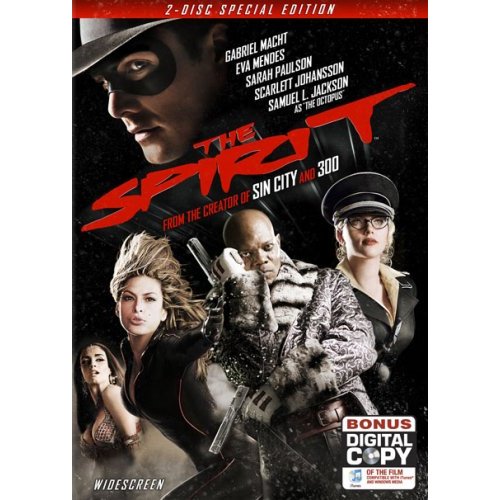
5. The Spirit (Frank Miller, 2008)
    Budget: Not given on imdb,
   however reported $53,000,000 on
   wikipedia.
   UK box office: £3,259,898
   US box office: $74,798

A reason why I enjoyed The Spirit is because it’s a super-hero movie like no other; it’s set out like a comic book but for the big and small screen. Another reason why I enjoyed this film is because although it’s set out like a comic book which is seen to be quite childish the plot manages to make it feel more for adults.

Friday, 8 October 2010

RM - My Coursework Task

THE BRIEF, EVALUATION + HOW ITS ALL MARKED

THE BRIEF
The mission is to carry out the following brief:
Preliminary exercise: Continuity task involving filming and editing a character opening a door, crossing a room and sitting down in a chair opposite another character, with whom she/he then exchanges a couple of lines of dialogue. This task should demonstrate match on action, shot/reverse shot and the 180-degree rule.
Main task: the titles and opening of a new fiction film, to last a maximum of two minutes.
All video and audio material must be original, produced by the candidate(s), with the exception of music or audio effects from a copyright-free source.

The coursework is worth 50% of the AS (same at A2) and the marking (detailed later) is divided into 3 sections:
RESEARCH AND PLANNING: 20%
PRODUCTION: 60%
EVALUATION: 20%

The Evaluation:

The evaluation needs to be in mind at all times during the production of the two minute clip, and tasked with answering the following questions:
  • In what ways does your media product use, develop or challenge forms and conventions of real media products? 
  • How does your media product represent particular social groups?
  • What kind of media institution might distribute your media product and why? 
  • Who would be the audience for your media product? 
  • How did you attract/address your audience? 
  • What have you learnt about technologies from the process of constructing this product? 
  • Looking back at your preliminary task, what do you feel you have learnt in the progression from it to the full product?
HOW ITS ALL MARKED

When the marker marks my coursework, they will have too write a paragraph for the exam board justifying the marks given. For each section there are key components of the work which the examiner have to assess as being one of the following:
MINIMAL
BASIC
PROFICIENT
EXCELLENT
G321 - Simplified Marking Criteria as 1 Sheet

g